
September 09, 2026
How to Help a Child Stay Focused During Homework
You ask your child to complete one worksheet.
Two minutes later, the pencil is on the floor, the chair has become a rocking horse, and your child suddenly needs water, a snack, and a detailed conversation about something that happened three weeks ago.
This does not always mean the child refuses to cooperate.
Sometimes the brain needs more support to begin, organize, and complete the task.
## Attention Is Not Just About Effort
Focus depends on several executive functions. These include working memory, impulse control, planning, and the ability to move from one task to another.
A child may understand the homework and still have trouble starting it. Another child may begin easily but lose track of the instructions. Some children need movement or sensory input before their nervous system reaches a state that supports attention.
This is why repeated commands such as pay attention or sit still often fail. They tell the child what to do, but they do not teach the brain how to do it.
## Start With the Environment
Before you correct the child, look at the space.
A television in the background, toys on the table, uncomfortable clothing, hunger, fatigue, and even a noisy sibling can compete for the child’s attention.
The homework space does not need to look perfect. It only needs to reduce unnecessary demands on the brain.
Try these simple changes:
* Keep only the materials needed for the current task on the table.
* Place water nearby.
* Reduce background noise.
* Use a comfortable chair with support for the child’s feet.
* Keep the phone and unrelated screens out of reach.
* Choose a consistent place for homework when possible.
A calmer environment gives the brain fewer things to filter.
## Make the Task Smaller
A page full of questions can feel much larger to a child than it looks to an adult.
Instead of asking the child to finish everything, divide the assignment into visible steps.
Complete three questions. Take a short break. Then complete the next three.
You can also cover part of the page with a blank sheet of paper so the child sees only the section that needs attention.
A smaller task reduces mental overload and gives the brain a clear starting point.
## Give One Instruction at a Time
Long instructions place pressure on working memory.
Instead of saying, Get your math book, find the worksheet, complete the first page, check your answers, and put everything in your backpack, offer one or two steps at a time.
For example:
Get your math book and worksheet.
After that step is complete, give the next direction.
This is not about making life too easy. It provides the structure the child’s brain may not yet create alone.
## Use Short Work Periods
Some children do better with ten focused minutes than with thirty minutes of frustration.
Set a short and realistic work period based on the child’s age and current capacity. Follow it with a brief break.
During the break, the child can stretch, walk, drink water, or take a few slow breaths. Avoid highly stimulating screens because they can make the return to homework much harder.
The goal is not to keep the child seated for as long as possible. The goal is to help the child complete the task with less stress.
## Allow Helpful Movement
Movement does not always mean distraction.
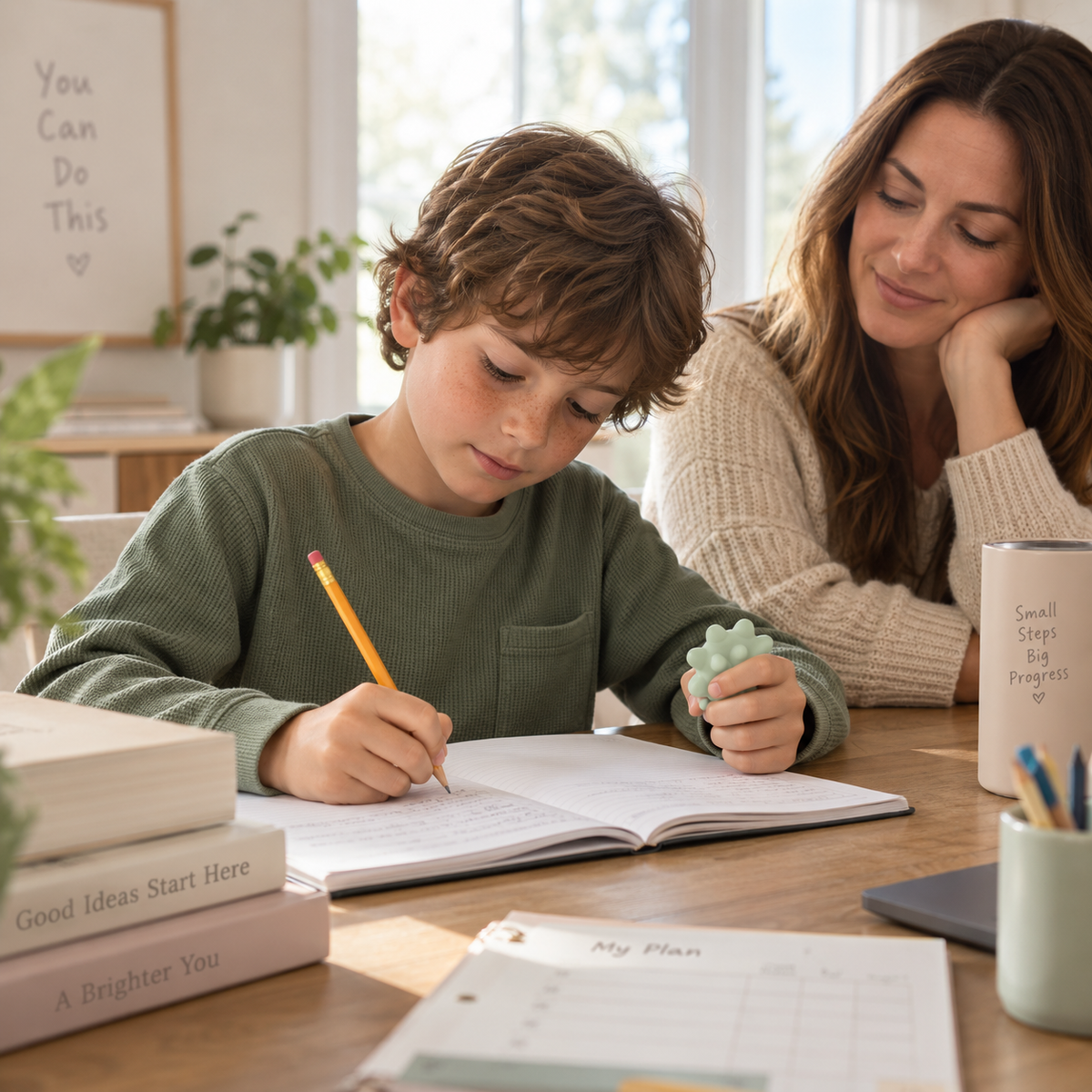
For some children, a small amount of movement helps the nervous system regulate alertness. A child may focus better while standing, using a foot band, squeezing a quiet fidget, or sitting on a cushion that allows gentle movement.
The important question is simple:
Does this tool help the child return to the task, or does it become another task?
A helpful fidget stays mostly in the hands and does not require constant visual attention. If the child watches it, throws it, shows it to everyone, or stops the assignment to play with it, that particular tool may not fit homework time.
Creative & Mind Quiet Wigglets were created for moments when the hands need something to do without adding unnecessary noise to the room.
Notice What Happens Before the Child Loses Focus
Instead of looking only at the behavior, look for the pattern.
Does focus disappear when the work feels difficult?
Does the child avoid tasks that require writing?
Does frustration increase after school?
Is the child hungry, tired, anxious, or afraid of making a mistake?
Sometimes what looks like inattention is actually anxiety, mental fatigue, sensory discomfort, or difficulty understanding the assignment.
Behavior gives us information. It is not the whole story.
Praise the Process Specifically
General praise can feel pleasant, but specific feedback teaches the brain what worked.
Instead of only saying good job, try:
You started after the first reminder.
You completed five questions before your break.
You noticed that you needed help and asked for it.
You came back to the table after your break.
This helps the child recognize the actions that support success.
When Homework Becomes a Daily Battle
If homework regularly takes much longer than expected, causes intense emotional reactions, or creates conflict every evening, talk with the child’s teacher.
Ask how the child works during class and whether similar difficulties appear at school. Persistent struggles may relate to attention, learning, anxiety, executive function, sleep, or other needs that deserve a closer look.
A sensory tool can support regulation, but it does not replace professional assessment or individualized care.
The Goal Is Not Perfect Focus
No child stays focused every minute. Adults do not either, although we are often much better at hiding it behind a coffee cup.
The goal is to help the child understand what their brain needs, use practical supports, and return to the task after attention drifts.
Homework can teach more than math or spelling. With the right support, it can also teach self-awareness, persistence, and how to ask for help.
Small changes often create a calmer experience for the child and for the adult who has already picked up the pencil from the floor six times.
Herica Utida
Psychologist, CBT specialist, EMDR therapist, and creator of Creative & Mind